Witches

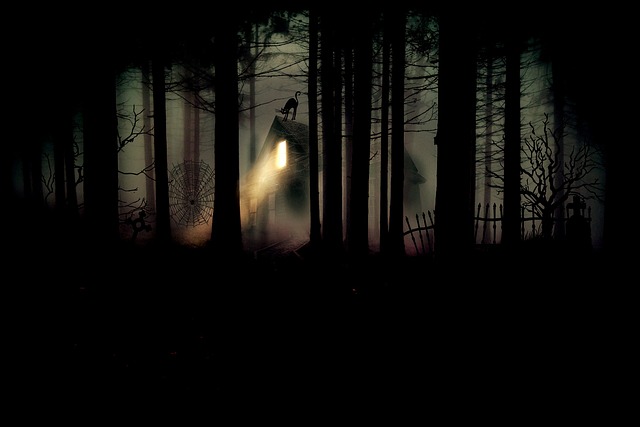
The cackling witch, cloaked in all black, with her tall, pointed hat, green face and warts, is the queen of Halloween. She might be seen stirring a brew in her magical cauldron, or flying over the moon on her broom, or stalking the night with her familiar, a black cat. As fantastical as she sounds, the witch did exist, but in reality she is far from how we envision her today.
Women played a significant role in pre-Christian societies. Women were midwives, healers, priestesses, and community leaders. The Christian church, a fiercely patriarchal organization, began to persecute women who played significant roles in society, and branded them as witches. Thousands, some say millions, of accused witches were tortured and killed over a period that is now called the Burning Times by neo-Pagans. And although the image of the witch is primarily female, men and children were also tried as witches during these times. The term “witch” was applied to anyone who did not practice the Christian faith, or were “pagan”.
It was around 1450 that the witch hunts began in many parts of western Europe. These trials were most devastating in Germany, France and Switzerland, although trials took place in other countries such as Ireland, Scotland, England, Spain, Poland, and Russia. It was with the creation of the Gutenberg press that the witch hunts were propelled to a much larger scale, as it made possible the widespread distribution of witch hunting manuals. These manuals provided guidelines for the hunting, trying, torturing and execution of witches in horrifying detail. The most famous of these manuals was the Malleus Maleficarum, or The Witches’ Hammer.
The Malleus Maleficarum propelled the witch hunts by a religiously-fueled misogyny:

“All wickedness is but little to the wickedness of a woman. … What else is woman but a foe to friendship, an unescapable punishment, a necessary evil, a natural temptation, a desirable calamity, domestic danger, a delectable detriment, an evil nature, painted with fair colours… Women are by nature instruments of Satan — they are by nature carnal, a structural defect rooted in the original creation.”
It was during 1550 and 1650 that witch trials and executions reached a peak. A person could be accused by a neighbor, a friend, a husband or wife, even a child. Personal agendas were often carried out, starting with a false accusation, as almost anyone could be accused and “proven” to be a witch. With the variety of torture methods available in many of these countries (especially Germany), it wasn’t difficult to extract false confessions and further accusations of neighbors or family members as “co-conspirators”.
Much of the modern idea of the witch as hag is derived from the various demonization efforts of the inquisitors. In reality both men and women, old and young, rich and poor were tried as witches, although women were the majority of the accused. It was often the older woman who made the easiest target for inquisitors. Perhaps the older woman was a midwife, a healer, a fortune-teller or just happened to be eccentric. Perhaps she worshipped a non-Christian god, or she owned her own property. Or perhaps she just happened to be in the wrong place at the wrong time.
The European witch trials started dying out in the 1700s. Many old shrines and holy places dedicated to the old pagan gods were either destroyed or had been “re-dedicated” to Christian saints or simply had a cross put in its place. Although it seems much of the pagan religions were wiped out, there is a growing interest in “reviving” these traditions by neo-Pagans and Wiccans.
As belief in witches slowly died out, she came to represent something less sinister and more whimsical. Television and movies present a modern witch, younger and more attractive, who casts harmless spells and is often not evil at all.