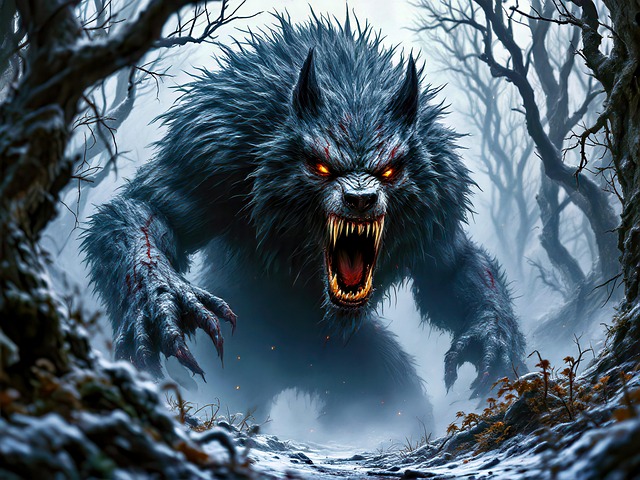
Werewolves
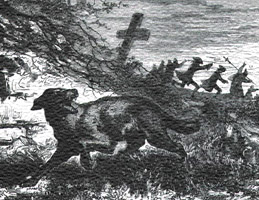
“Even he who is pure of heart
And says his prayers by night
May become a wolf when the wolfbane blooms
And the moon is pure and bright.”
Belief in the werewolf, or “spirit-wolf,” probably began with early medieval wolf clans who worshiped their totemic gods in wolf form, as did some people of the Greco-Roman world centuries earlier. One myth says the first werewolf was Moeris, spouse of the trinitarian Fate-goddess (Moera), from whom he learned secrets of magic, including the necromantic knack of calling up the dead from their tombs.
The magic the moon holds over the werewolf is symbolic of the magical ties the moon goddess was said to have over both beasts and man. The term “lunatic”, (luna being Latin for “moon”), was a label given to anyone possessed by the power of the moon, or the moon goddess.
Lycanthropy (werewolfism) was named for Apollo Lycaeus, “Wolfish Apollo,” who used to be worshiped in the famous Lyceum or “Wolf-temple,” where Socrates taught.
Wofl spiritEuropean legends have many ways in which someone may become a werewolf, such as drinking from a stream in which a wolf has drunk, being bitten by a wolf, or eating the wolfbane plant.
Italian peasants still say a man who sleeps outdoors on Friday under a full moon will be attacked by a werewolf, or will become one himself.
During the Inquisition, hundreds of people all over Europe were tortured and executed by the church for being werewolves, as it was believed to be yet another form a witch could take.
Spirits move most flexibly between the worlds on Halloween. Commonly we envision these spirits of the natural world in a human-like form and the werewolf is no exception, as the werewolf is the wolf spirit embodied in the human.