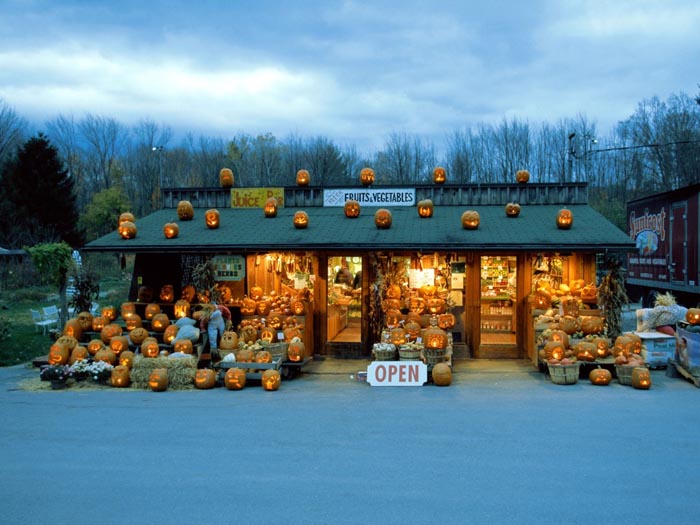
Pumpkins
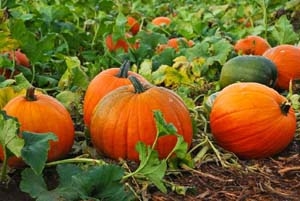
In the United States, the carved pumpkin was first associated with the harvest season in general, long before it became an emblem of Halloween. The practice of carving produce for Halloween originated from an Irish myth about a man named “Stingy Jack”. The practice of carving pumpkin jack-o’-lanterns for the Halloween season developed from a traditional practice in Ireland as well as Scotland and other parts of the United Kingdom of carving lanterns from the turnip, mangelwurzel, or swede (rutabaga). These vegetables continue to be popular choices today as carved lanterns in Scotland and Northern Ireland, although the British purchased a million pumpkins for Halloween in 2004 reflecting the spread of pumpkin carving in the United Kingdom. Immigrants to North America began using the native pumpkins for carving, which are both readily available and much larger – making them easier to carve than turnips. Not until 1837 does jack-o’-lantern appear as a term for a carved vegetable lantern, and the carved pumpkin lantern association with Halloween is recorded in 1866.