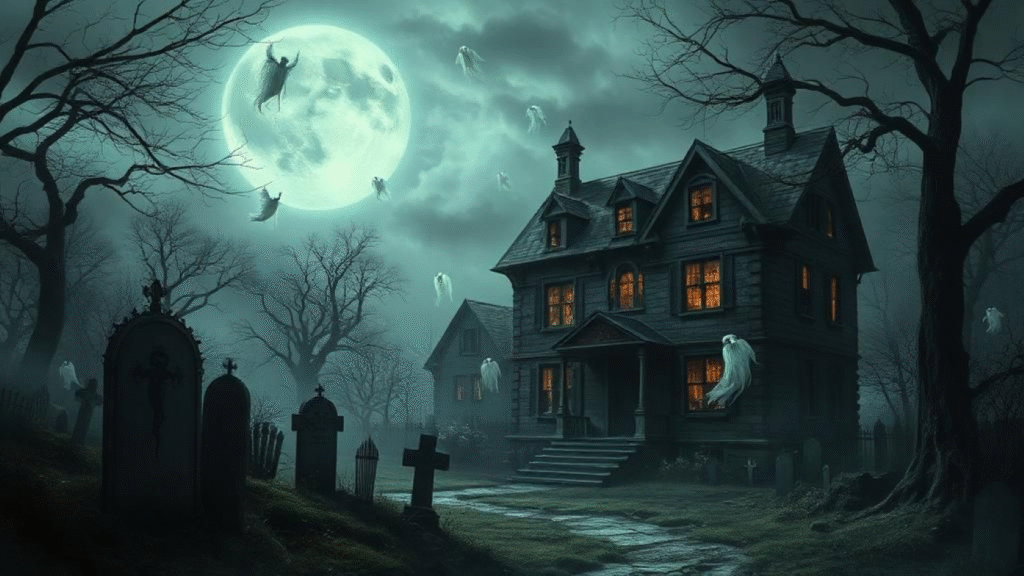
Ghosts
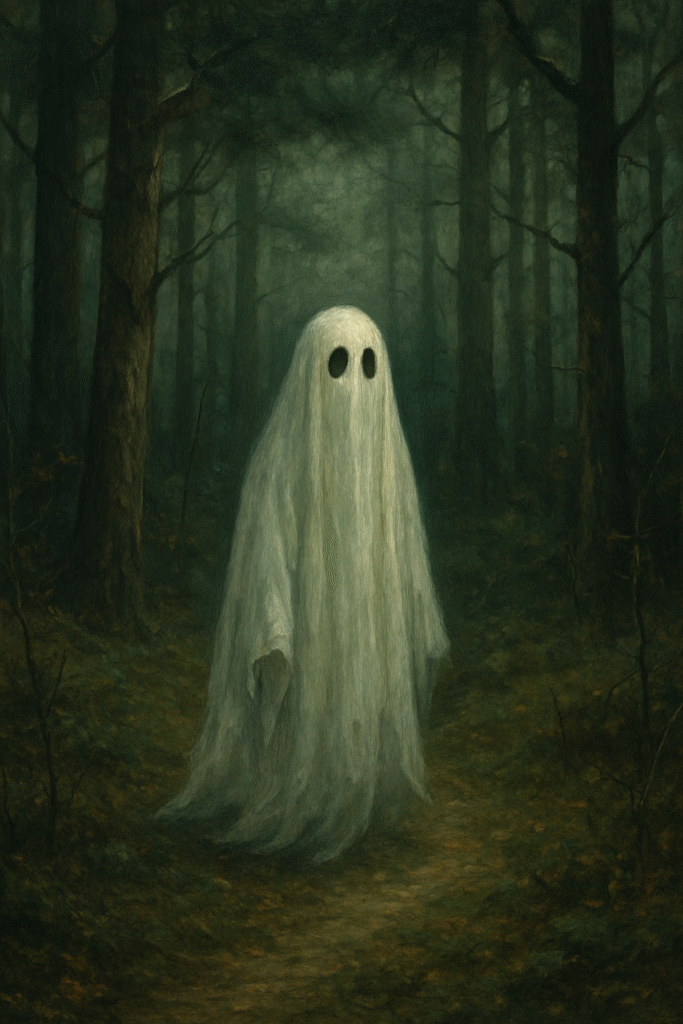
The word “ghost” is a cognate of “guest”, both words rooted in Germanic Geist, originally a spirit of a dead ancestor invited to tribal feasts on such occasions as Samhain and other similar holidays. Many European peoples preserved the heads or skulls of ancestors, which were set up, painted, and decorated, in a prominent position at gatherings of the clan, and were consulted for oracles after being offered their portion of the collation. Hence, the “Death’s-head at the feast.”
Ghosts were supposed to haunt all the scenes of their former lives, especially if they died violently or unhappily, or were buried in unconsecrated ground, or had possessed evil spirits. The earlier, more benevolent type of family ghost is still suggested by the identical pronunciation of “ghost” and “guest” in northern England. The anger of ghosts was most feared by people who refused to honor them as guests. Ghosts, like faeries, could “haunt” humans who did not honor them properly, either with burial, offerings or remembrance.
Ghosts, just like faeries, were believed to freely roam the earth on Halloween, as the veil between the spirit world and our’s is the thinnest on this night. Offerings of food and gifts were left out for the ancestors, or given to a costumed person representing the ghosts who roamed house to house on Samhain.