Faeries
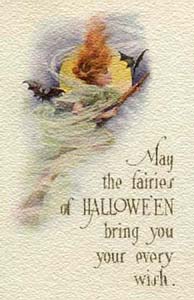
The Irish still say faeries live in the pagan sidh (burial mounds and barrow graves), several hundred of which still stand in the Irish countryside. Faeries came out of their faery hills at Halloween, Celtic folk said, because the hills themselves were tomb-wombs of rebirth according to the ancient belief.
Halloween was the time when the dead returned to earth with the help of the priestess — who, under Christianity, were newly described as witches. Respect for the pagan dead endured to a remarkably late date, even among Christians whose church taught them that the old deities were devils. Cornish miners refused to make the sign of the cross when down in the mine, for fear of offending the faeries in their own subterranean territory by making a gesture that invoked the enemy.
Faery mounds were entrances to the pagan paradise, which might be located underground, or under water, or under hills on distant islands.
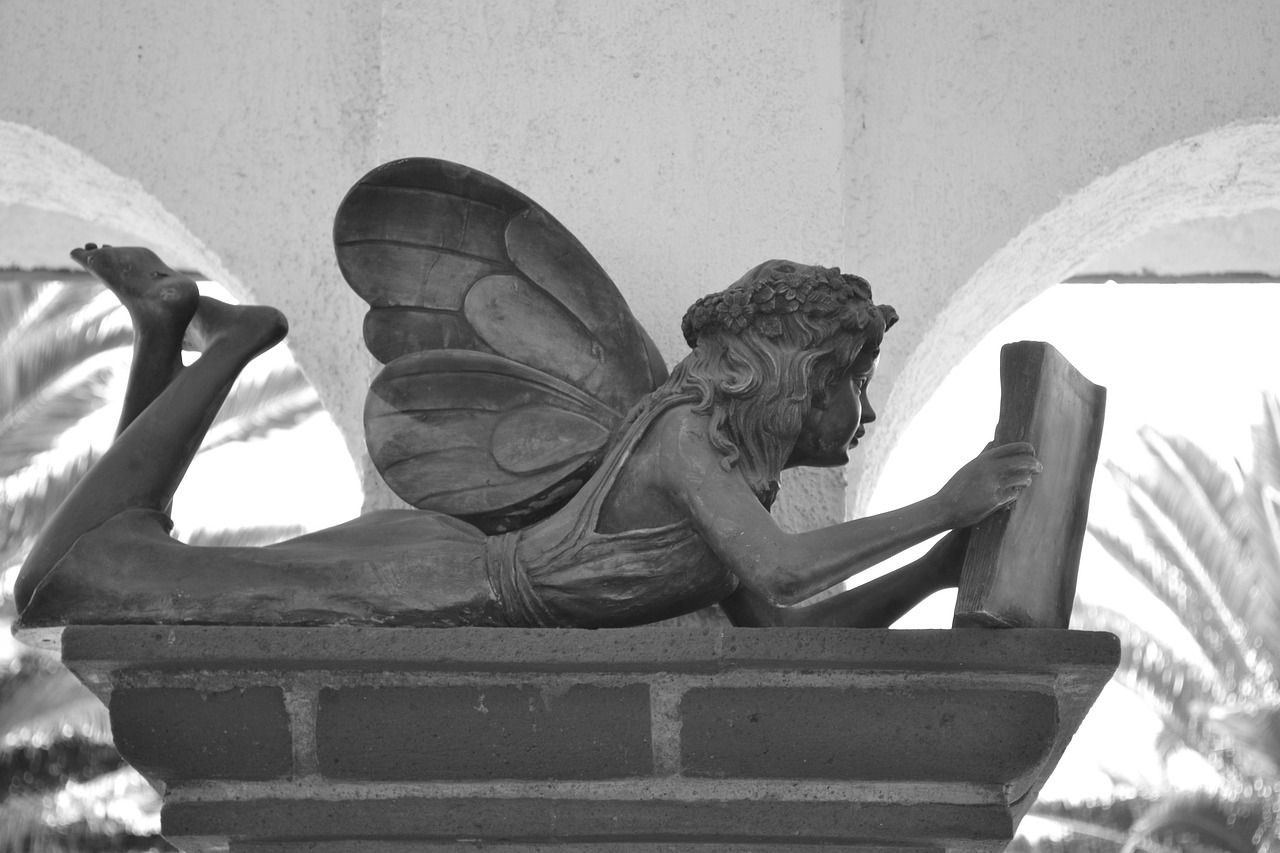
Celtic folk use to leave out offerings to the faeries in hopes of obtaining good fortune. When, in the morning, the food appeared untouched, it was still thrown away as it was thought that the “essence” of the food had been taken by the faeries. This tradition is similar to the treatment of the dead in many cultures, where offerings of food and gifts are left out for dead relatives on certain dates or on holidays such as Halloween and Dia de Los Muertos. Perhaps this is where the tradition of Trick or Treating originated. Children, dressing as demons and monsters (representing faeries, goblins and the dead), go house to house gathering treats, which represented offerings to the ancestors.
It was conversely thought that if one were to deny the faeries an offering, one would surely be cursed with bad luck, or worse, with death. This was the “trick” played by the faeries onto human beings.