Cauldron
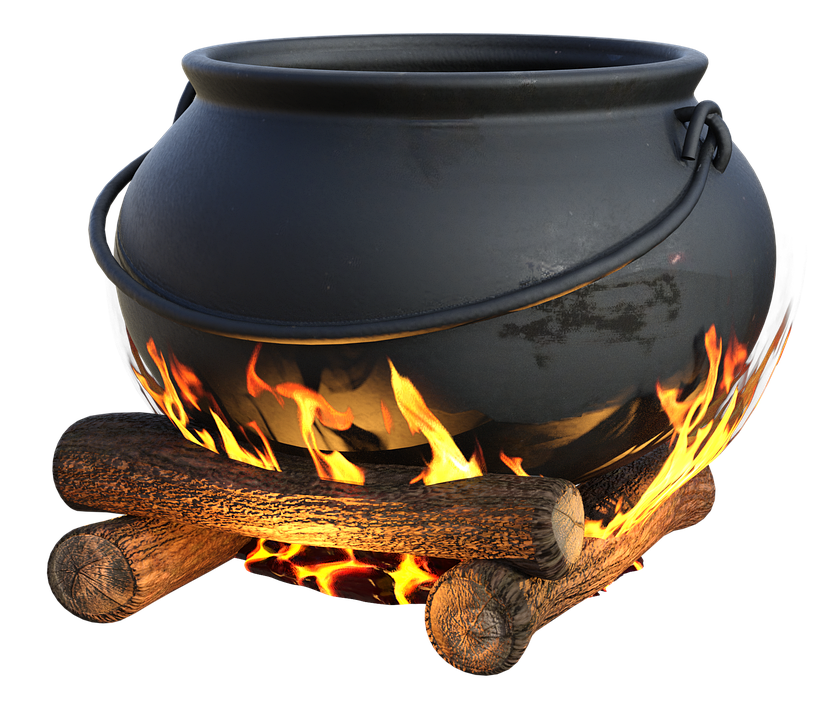
The cauldron is another item the witch is rarely seen without. Bent over the billowing steam of her mysterious brew, the witch utters a secret charm and tosses in her last item… now, her spell is complete! But where does the witch’s cauldron originate?
Shakespeare followed the traditional pattern in associating the cauldron with three witches, whom stood for the Triple Goddess of Fate, or wyrd in Old English: The Three Weird Sisters.
The cauldron is popularly known for its magical ties to life and death. Mythologically, it is a symbol of regeneration and associated with the womb of the great mother, which serves as a place of birth and death.
“In nearly all mythologies there is a miraculous vessel. Sometimes it dispenses youth and life, at other times it possesses the power of healing, and occasionally, as with the mead cauldron of the Nordic Ymir, inspiring strength and wisdom are to be found in it. Often… it affects transformations.”

King Aeson was resurrected after being boiled in the cauldron of Medea, “mead of wisdom,” eponymous Mother Goddess of the meads.
Under the name of Demeter, the Goddess restored Pelops to life in her cauldron.
Among the Celts of Gaul and Britain, the Cauldron of Regeneration was the central religious mystery: reincarnation within the womb of the Goddess.
“I will give you a cauldron whose vitrue is this: if a man be killed today, you have not but to cast him within so that on the following day he will be as good as ever, save that he will no longer have the power of speech.” (From Branwen, Daughter of Llyr.)
