Black Cats
Along with the owl and the wolf, the animal most commonly associated with witches was the cat. Like almost everything else associated with witchcraft, this idea dated back to ancient Goddess-worship.
- The Norse goddess Freyja rode in a chariot drawn by cats, and was the goddess of love, fertility and death.
- The Greek moon goddess Artemis often appeared in cat form, and was identified with the Egyptian cat-goddess Bast.
- Hecate is a very old goddess who later came to be known as the “Queen of the Witches”, and being a darker aspect of Artemis, was associated with the moon. The willow sacred to Hecate became a pussy-willow that bore “catkins” in the spring.
During the European witch trials in the middle ages, it was commonly believed that witches kept cats as familiars, or that the witches themselves could take the form of a cat. It was also said by inquisitors that all cats were demons, and when a witch was condemned to death, so should her cats. Handbooks for inquistors in the 1600s claimed that the ownership of a cat was primary evidence of witchcraft. In New England alone there were over 2,000 cat-related witch trials in this time-period. This was clearly a far cry from the cat-worshipping times of ancient Egypt, where anyone responsible for the death of a cat was executed, and the Egyptian people mourned the loss of a cat as one would mourn another human.
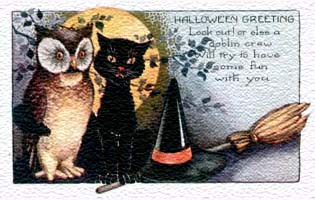
Not all cats who belonged to witches during the middle ages were black, but since black is the color representing both the night and death in many cultures, it would seem black cats are the ideal companion for the Halloween witch. “The cat’s blackness, unearthly wailings and natural nocturnal habits having intimately associated it with witches, the horror of the activities for which it is blamed is almost boundless.” The beauty and mysterious allure of cats will always be associated with the power of the witch.