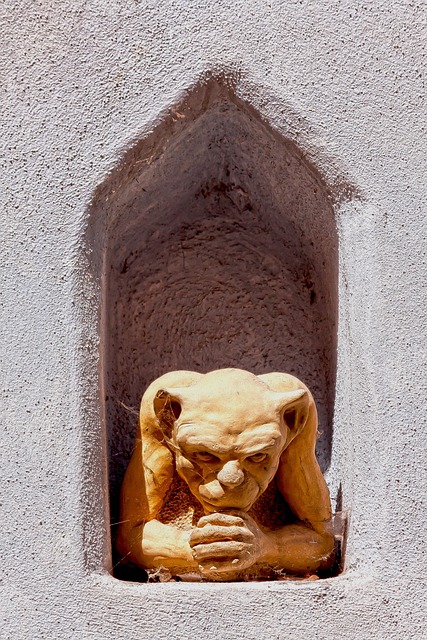
Demons

The medieval concept of the demon evolved from Christians’ blanketed condemnation of all pagan daimons, thought they continued to believe in their existence. Demons were usually considered messengers and assistants of a single Devil, in the same relationship to him as angels to God.
Animals and people could be “demons”, or could harbor demons within their bodies and their minds. Some authorities, familiar with the pagans’ animal masks and animal-headed idols, said demons were an animal-like race created separately by God, and readily incarnate in animal form. Black goats, bulls, cats, dogs, or frogs could be demons. St. Ambrose told of a certain priest who exorcized the frogs in a certain marsh to stop them from croaking during mass. St. Augustine asserted that demons helped sorcerers to perform their magic, and have the power to assume many animal shapes.
Records of witch trials show that almost any kind of animal could be thought of as a demon. Witches were executed because a neighbor’s child was frightened by “the devil in the shape of a dog”; or because a man saw “a Thing like unto a rat” run out of a woman’s house; or because a woman kept “two devils in the form of colts”; or because a neighbor saw “the devil in the form of a toad” in a woman’s garden; or because a traveler saw “a Thing like a black crow” near the house of the accused; or because children heard a woman “talk to the devil in the form of a frog.”
Before the witchcraft mania set in about the 12th and 13th centuries, there was a general understanding that demons were nothing more than the old gods and goddesses, all of whom had animal incarnations of some kind. Christian fathers insisted that the pagan deities were not figments of imagination, but real, living demons.